Volunteers Don't Vanish — They Leave: A Lifecycle Audit for Groups That Keep Losing People

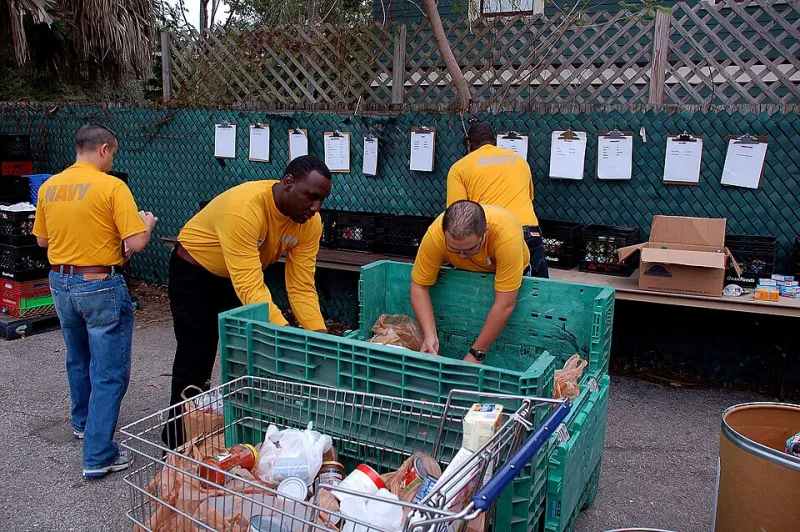
Photo: Xnatedawgx, CC BY-SA 4.0, via Wikimedia Commons
Every week, someone on your team says the same thing: we need more volunteers. The instinct is understandable and, in most cases, misdirected. Organizations that track the question carefully tend to find that people are not refusing to show up. They are showing up once, encountering a structure that does not work for them, and quietly deciding not to return.
Recruitment is a funnel with a wide top and a leaky bottom. Widening the top is expensive. Patching the bottom is mostly a matter of attention. What follows is a stage-by-stage audit of the volunteer lifecycle, from the first inquiry to the exit conversation, with concrete changes that respect the most important thing a volunteer gives you: their time.
Stage One: The First Inquiry
The gap between a person expressing interest and hearing back is the single strongest predictor of whether they ever volunteer. Most organizations respond in five to ten days. By then, the impulse has passed and the calendar has filled.
Fix: Assign one named person to inquiry response with a 48-hour standard. Use a shared inbox, not an individual's account, so the responsibility survives vacations. If you cannot commit to 48 hours, say so publicly and set an honest expectation instead.
Stage Two: The Intake Conversation
Most intake is really a screening exercise — a search for reasons to say no. Turn it around. The purpose of the first conversation is to learn what the person can offer, what they cannot, and what would make the experience worth their Saturday.
Fix: Ask three questions. What are you good at? What do you not want to do? How much time can you realistically give, and on what schedule? Write the answers down. Most organizations ask for availabilities and ignore everything else.
Stage Three: The First Shift
The first shift determines the second. Yet many organizations treat it as a scheduling event rather than a designed experience: no greeting at the door, no name tag, unclear tasks, and a two-hour orientation video.
Fix: Build a first-shift protocol. Someone meets the volunteer at the entrance. Someone introduces them by name to three people. There is one clearly scoped task with a visible outcome. There is a fifteen-minute debrief before they leave. This costs almost nothing and changes everything.
Stage Four: Role Design
Rigid roles are the most common source of attrition among working adults, caregivers, and people with disabilities. A four-hour Tuesday morning shift excludes anyone with a nine-to-five, a school run, or a fluctuating work schedule.
Fix: Break large roles into smaller, modular tasks with defined completion conditions. A two-hour project that can be done on a weekend will outperform a recurring weekday shift for most people under forty. Offer at least one remote or asynchronous option. Where possible, let people choose their own schedule within a range rather than assigning one.
Stage Five: The Meaning Loop
Volunteers leave when they cannot see the effect of their work. Sorting cans in a back room is necessary and honorable, but if the volunteer never learns that the cans reached 140 households this month, the work becomes abstract.
Fix: Close the loop monthly. A short note that states what was accomplished this month, with a number and a story, is more motivating than any recognition event. Let volunteers see the people they serve wherever it is appropriate and consented.
Stage Six: Growth and Pathways
People stay where they can grow. Organizations that route every capable volunteer into the same entry-level task signal that there is nowhere to go.
Fix: Publish a simple ladder: entry-level task, skilled task, team lead, program support, board or committee service. Make it visible, make it voluntary, and make it non-hierarchical in tone. Not everyone wants to lead. Everyone wants to know that the option exists.
Stage Seven: Permission to Pause
The sector's real retention killer is guilt. Volunteers disappear because stepping back feels like a betrayal, so they avoid the conversation entirely.
Fix: Build structured off-ramps. Seasonal commitments with defined end dates. A formal pause option that preserves the relationship. A quarterly check-in email with a one-click "I need a break." A volunteer who pauses well is far more likely to return than one who ghosts.
Stage Eight: The Exit Conversation
The most underused source of organizational learning in the nonprofit sector is the exit interview nobody conducts. When a volunteer stops coming, we usually conclude they were too busy and move on.
Fix: Send a five-question survey within a week of a volunteer's last scheduled shift. Ask what worked, what did not, whether they would recommend the organization to a friend, and whether they would return. Read the answers in a staff meeting. Act on the two most common complaints within a quarter, and say publicly that you did.
What to Measure
Stop counting the number of people who sign up. Start counting the share who return for a third shift. Track time-to-first-response, first-shift attendance rates, and the average tenure of active volunteers. Three numbers, reviewed quarterly, will tell you more about your capacity than any recruitment campaign.
The underlying principle is not complicated: people give their time to organizations that appear to have thought about it. Design the experience as carefully as you design the program, and the shortage you have been trying to recruit your way out of will begin to resolve itself.